Secure and Private System Design for Generative & Agentic AI
Time: 9:00 - 17:00 (PDT), July 26, 2026
Location: Mtg Room 101A, Long Beach (Co-located with DAC 2026)

Generative and agentic AI are reshaping computing at every layer, from research and infrastructure to the design of the systems themselves. As these capabilities are embedded into how silicon, software, and full-stack platforms get built and verified, both the threat surface and the means to defend it are being rewritten. The SPGAI 2026 Workshop on Secure and Private System Design for Generative and Agentic AI, co-hosted with the Design Automation Conference (DAC), confronts this dual frontier: hardening AI agents and the artifacts they generate against new and largely unmapped attack surfaces, while harnessing those same agents as a force multiplier for vulnerability discovery, secure-by-construction generation, automated compliance, and trustworthy verification. The program is organized around three intertwined themes — Secure, Private, and Trustworthy AI Agents, Securing the Artifacts of Agentic AI, and Generative and Agentic AI for Security, Privacy, and Trustworthiness — and welcomes contributions across EDA, chip and SoC security, quantum and neuromorphic computing, electro-optic co-design, and embedded and cyber-physical systems.
Keynote Speakers
Listed in order of presentation time.
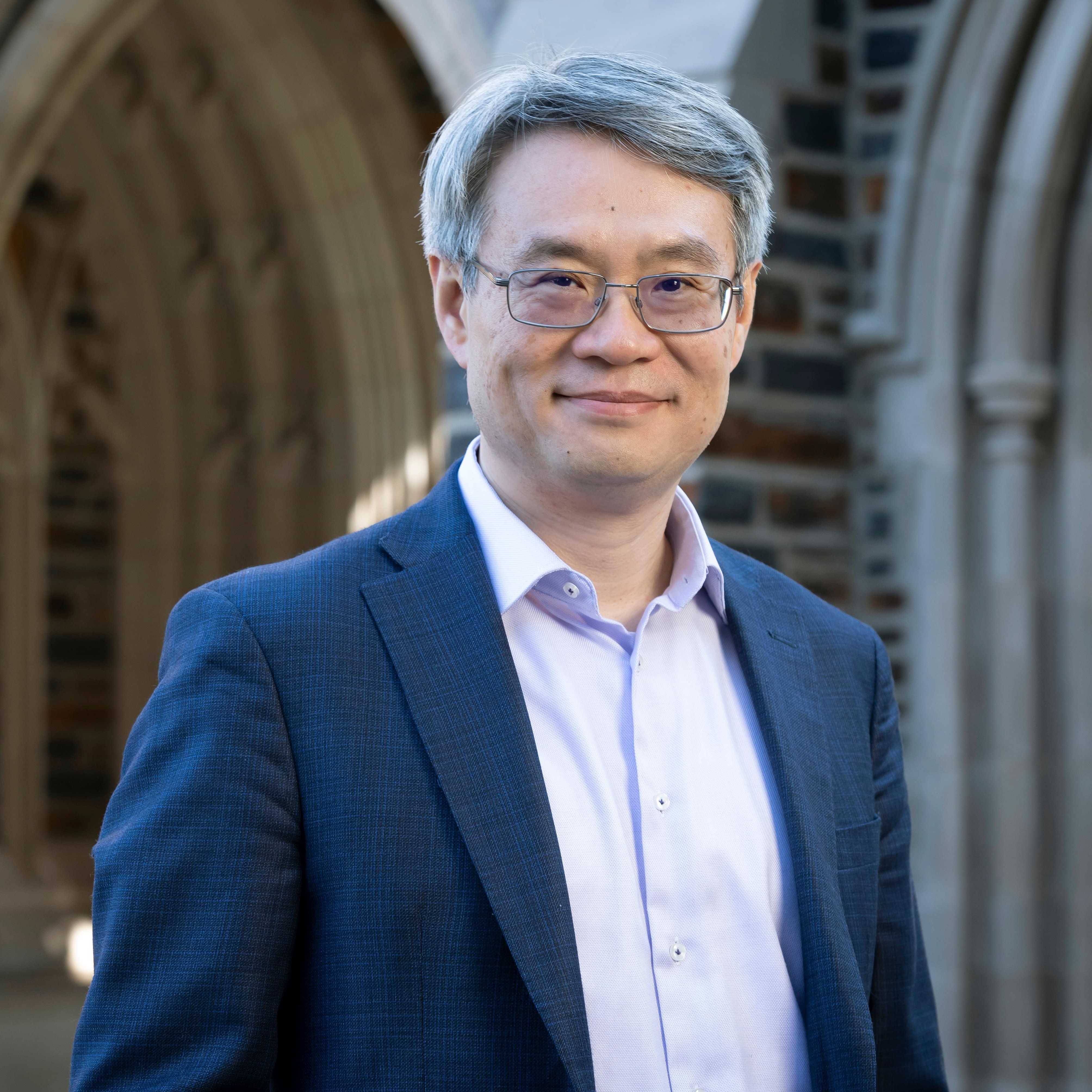
Yiran Chen
John Cocke Distinguished Professor of Electrical and Computer Engineering, Duke University
From Data to Decisions: Securing What AI Sees, Knows, and Does
As artificial intelligence evolves from data-driven machine learning to autonomous agents, ensuring its trustworthiness requires a holistic approach to security and privacy across the entire stack—from data, to models, to agents. We will explore three complementary research thrusts: protecting what AI sees, what AI knows, and what AI does. We begin with privacy-preserving frameworks for secure circuit data sharing in EDA and techniques that protect personally identifiable information (PII) from being exposed through foundation models. We then examine defenses that shield proprietary model knowledge and improve adversarial robustness. Finally, we look toward how AI agents can execute complex, real-world actions effectively while respecting contextual privacy boundaries.

Qiaoyan Yu
Program Director, NSF CISE; Professor, University of New Hampshire
Building Trustworthy Foundations for Secure and Private Generative and Agentic AI
Generative and agentic AI are rapidly accelerating the deployment of intelligent systems to various application domains. As these systems become increasingly autonomous and interconnected, ensuring their security, privacy, and trustworthiness pose new challenges in forming threat models, developing new design flow, and mitigating new attacks. Addressing these challenges require advances that span cybersecurity, privacy, AI, systems, human-centered computing, and many other disciplines. This keynote will discuss emerging research frontiers in security and private system design for generative and agentic AI. Furthermore, this talk will highlight research and education opportunities available in NSF to advance the trustworthy foundation for generative and agentic AI.
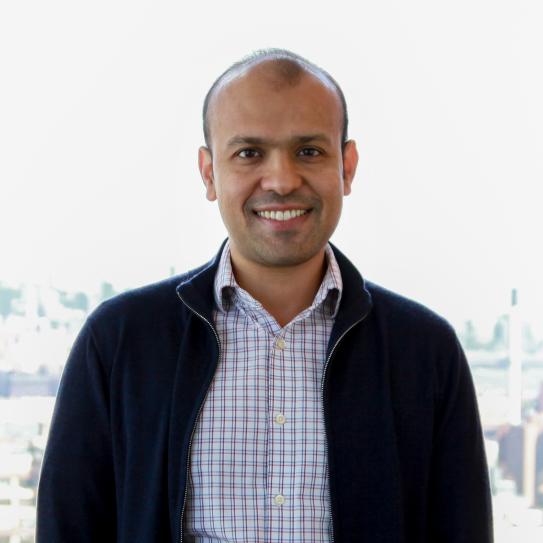
Siddharth Garg
Professor of Electrical and Computer Engineering, NYU Tandon School of Engineering
On the (In)security of LLM Code Generation

Farimah Farahmandi
Walden Rhines Endowed Professor, Department of Electrical and Computer Engineering, University of Florida
Training Virtual Security Verification Engineers for System-on-Chip Security Assurance
Security verification of modern System-on-Chips (SoCs) requires engineers to perform a wide range of complex tasks, including identifying security-critical assets, modeling threats, developing security properties, generating testbenches, and analyzing verification results. These activities demand significant expertise and engineering effort, creating a major bottleneck in achieving comprehensive security assurance. We present a framework for training AI-powered virtual security verification engineers that collaborate to accelerate SoC security verification. Each virtual engineer specializes in a particular verification task, such as threat modeling, asset identification, property generation, test development, or verification analysis, while collectively orchestrating industrial EDA tools including simulators and formal verification engines. By combining domain-specific knowledge, retrieval-augmented reasoning, and autonomous tool interaction, these virtual engineers reduce manual effort, improve verification coverage, and significantly accelerate verification closure.

Ro Cammarota
Associate Professor of Computer Science, University of California, Irvine
Encrypted Computing: From Cryptographic Curiosity to Infrastructure for Private AI
As AI becomes ubiquitous, protecting the data it consumes is emerging as one of computing's defining challenges. Encrypted computing enables computation on protected data, allowing privacy, security, and AI to coexist without compromise. Over the past decade, the field has evolved from a cryptographic curiosity into a rapidly growing systems discipline spanning cryptography, algorithms, software, computer architecture, hardware acceleration, cloud platforms, and international standards. Backed by major government and industry investments, encrypted computing is transitioning from research prototypes to deployable infrastructure. This talk explores that evolution, surveys the current state of the art, examines the remaining barriers to deployment, and highlights the investments, initiatives, and standardization efforts shaping the ecosystem. Finally, it offers a perspective on the next frontier: privacy-native computing infrastructures that make encrypted computing a foundational capability of future AI systems.
Distinguished Speakers
Listed in order of presentation time.
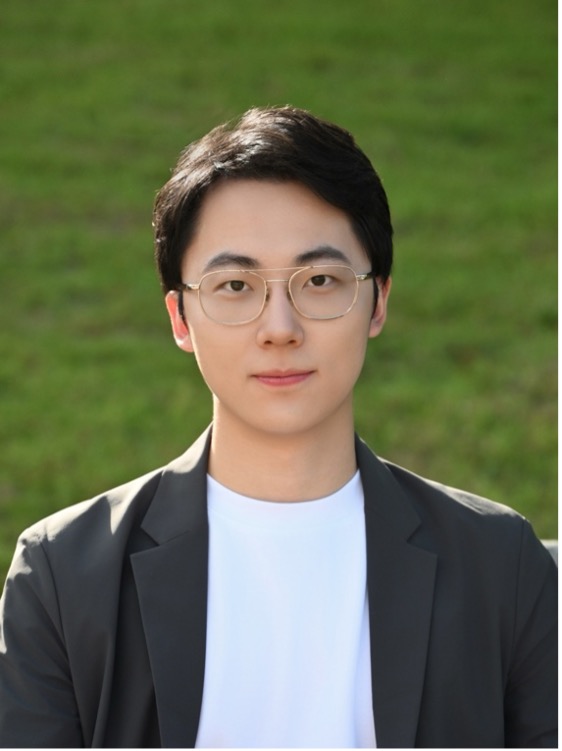
Yushun Dong
Assistant Professor of Computer Science, Florida State University
Protecting the Knowledge Assets of Generative and Agentic AI
Generative and agentic AI are increasingly delivered as services and exposed through APIs and agentic interfaces. While this paradigm makes powerful AI capabilities broadly accessible, it also opens a new and largely unmapped attack surface centered on the systems' most valuable core: their knowledge assets, ranging from the knowledge encoded in model parameters to the external corpora that ground retrieval augmented systems. This talk presents a coherent view of the threats to these knowledge assets and the means to defend them. It begins by establishing a taxonomy of model extraction and knowledge stealing, framing how an adversary can reconstruct a model's capabilities or extract its underlying knowledge purely through query access. Building on this framing, the talk shows how the threat escalates as AI moves from standalone models toward agentic systems, where the knowledge base of a retrieval augmented generation pipeline becomes a directly extractable artifact and characterizes both the attacks and the defenses through a systematic benchmark. The talk then turns to the defender, presenting a certified approach to ownership verification that offers provable guarantees against model extraction, allowing a model owner to reliably claim a stolen model much as a watermark or fingerprint would establish ownership of intellectual property. Together, these perspectives trace a path from understanding the threat to deploying defenses with formal guarantees and highlight how security can be built into the real-world deployment of generative and agentic AI.
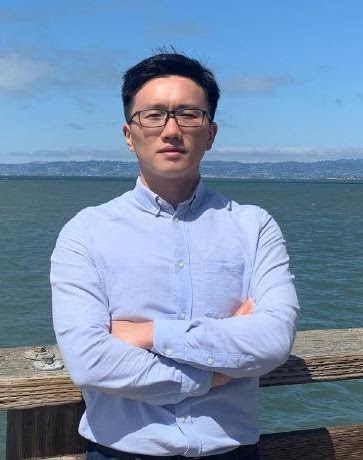
Weidong Cao
Assistant Professor of Electrical and Computer Engineering, George Washington University
Trustworthy Electronic Design Automation with Generative AI
Generative AI (GenAI), such as large language models (LLMs), is reshaping electronic design automation (EDA) by accelerating hardware code generation, design-space exploration, and circuit discovery. However, its deployment in real-world EDA raises a fundamental question: how can we build AI-driven design tools that are not only powerful, but also trustworthy? This talk addresses this question through two complementary directions: reliable LLM-assisted digital hardware design and privacy-preserving GenAI for analog circuit design. First, I will discuss how LLMs can be made safer for RTL code generation by mitigating memorization of proprietary IP, benchmark contamination, and unsafe coding behaviors. I will present a syntax-preserving unlearning framework that selectively removes problematic knowledge while maintaining the structural and functional integrity of generated hardware code. Second, I will introduce AnalogFed, a federated GenAI framework for large-scale analog circuit topology discovery. AnalogFed enables collaborative model training across distributed, siloed hardware datasets while protecting confidentiality against membership inference and model inversion attacks through dummy-token perturbation and efficient homomorphic encryption. Together, these works highlight a broader vision for trustworthy EDA with generative AI: models that can learn from valuable hardware knowledge without exposing proprietary data, generate useful designs without reproducing protected IP, and support scalable collaboration across institutions and companies.

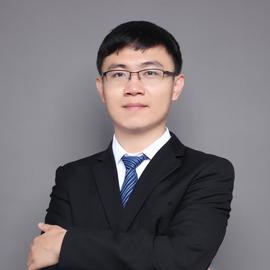
Minxuan Zhou
Assistant Professor of Computer Science, Illinois Institute of Technology
Hardware Acceleration with Compiler Optimizations for Fully Homomorphic Encryption
Fully homomorphic encryption (FHE) is crucial for post-quantum privacy-preserving computing. This talk will first introduce recent FHE accelerators that leverage hardware innovations, algorithmic adaptations, and compiler-level optimizations to achieve significant performance and energy-efficiency gains for various performance-critical FHE applications (e.g., privacy-preserving machine learning).
Meng Li
Boya Young Fellow Assistant Professor, School of Integrated Circuits and Institute for Artificial Intelligence, Peking University
Efficient Private Transformer Inference through Algorithm/Protocol/Hardware Co-Design
The last decade has witnessed the fast evolution of AI driven by the explosive growth of data. However, it also poses serious risks of data misuse and leakage. Privacy-preserving AI (PPAI) based on cryptographic primitives, e.g., secure multi-party computation, homomorphic encryption, etc., emerges as a novel computation paradigm that enables AI computation while providing formal data privacy protection, attracting increasing attention from both industry and academia. However, existing PPAI frameworks often suffer from significant computation and communication cost, especially for advanced Transformer models, which poses a serious barrier to real-world deployment. In this talk, I will introduce our recent works on cross-layer co-optimizations of Transformer models, PPAI protocols, and accelerator architectures to enhance the efficiency of private Transformer inference.
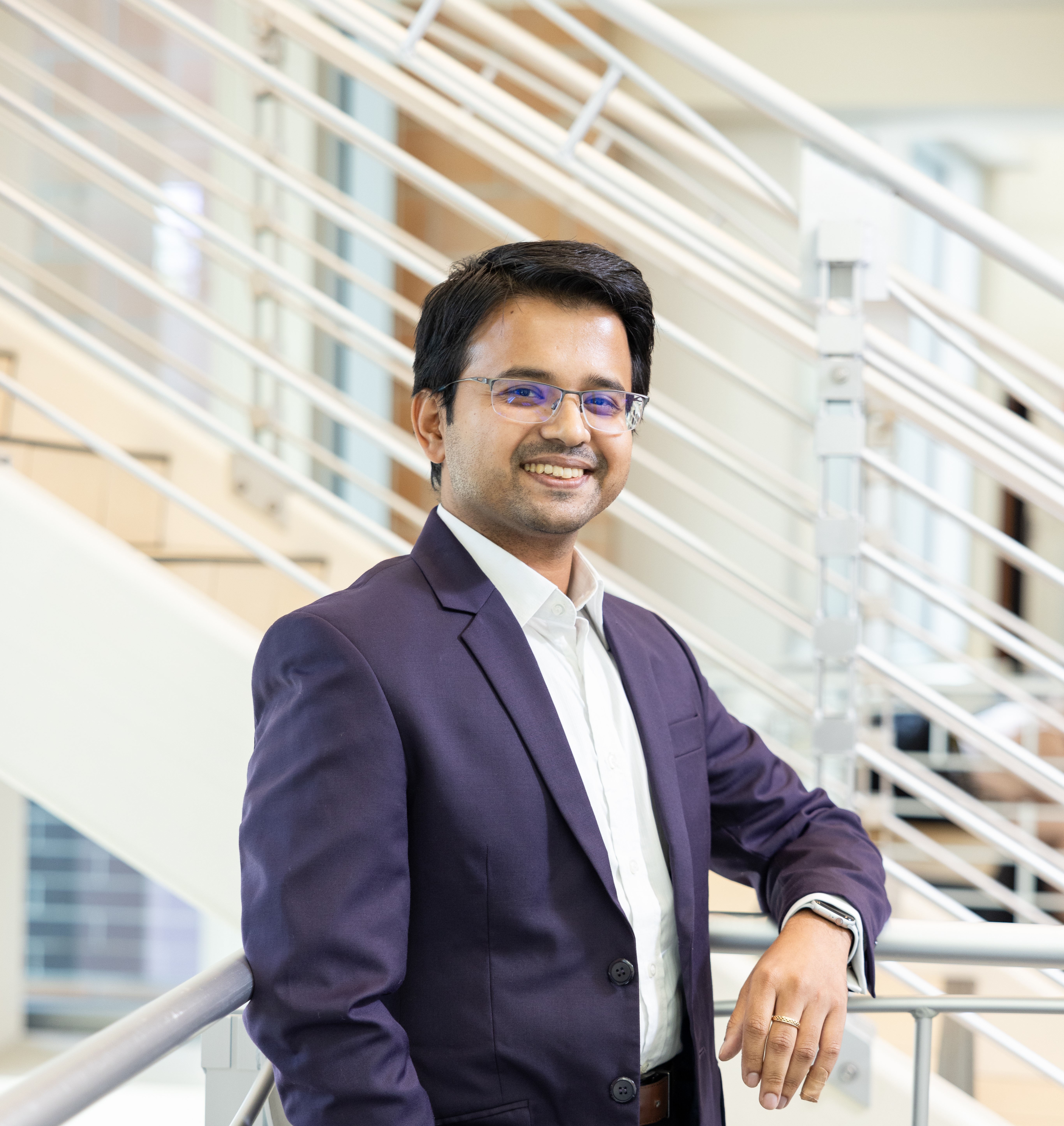
Sazadur Rahman
Assistant Professor of Electrical and Computer Engineering, University of Central Florida
End-to-end SoC Security Verification by Agentic AI and Formal Method
Schedule
Opening Remarks
Session 1 — Foundations & Trust for Generative and Agentic AI
Keynote
Yiran Chen (Duke University)
From Data to Decisions: Securing What AI Sees, Knows, and Does
Keynote
Qiaoyan Yu (NSF)
Building Trustworthy Foundations for Secure and Private Generative and Agentic AI
Networking Break
Keynote
Siddharth Garg (New York University)
on the (in)security of LLM code generation
Research Talk
Yushun Dong (Florida State University)
Protecting the Knowledge Assets of Generative and Agentic AI
Poster Session + Lunch
Session 2 — Trustworthy & Intelligent AI Hardware
Keynote
Farimah Farahmandi (University of Florida)
Training Virtual Security Verification Engineers for System-on-Chip Security Assurance
Research Talk
Weidong Cao (George Washington University)
Trustworthy Electronic Design Automation with Generative AI
Research Talk
Minxuan Zhou (Illinois Institute of Technology)
Hardware Acceleration with Compiler Optimizations for FHE
Networking Break
Session 3 — Encrypted & Private Computation
Keynote
Ro Cammarota (UC Irvine)
Encrypted Computing: From Cryptographic Curiosity to Infrastructure for Private AI
Research Talk
Meng Li (Peking University)
Efficient Private Transformer Inference through Algorithm/Protocol/Hardware Co-Design
Research Talk
Sazadur Rahman (University of Central Florida)
End-to-end SoC Security Verification by Agentic AI and Formal Methods
Closing Remarks
Workshop Organization
Organization Team

Qian Lou
Assistant Professor
University of Central Florida, USA

Hongyi Michael Wu
Professor
University of Arizona, USA

Mengxin Zheng
Assistant Professor
University of Central Florida, USA
Program Committee
Xiangrui Xu
South Dakota State University, USA
Xinhe Xu
University of Illinois at Urbana-Champaign, USA
Sreenivasa Reddy Hulebeedu Reddy
AT&T Services Inc., USA
Hao Ren
University of Illinois Urbana-Champaign, USA
Harish Gaggar
Intuit Credit Karma Inc., USA
Chengkai Yao
Georgia Institute of Technology, USA